By Martina Calvey, Founder & Director Growth & Impact, Hello GoodLife Ireland
September is Pain Awareness Month, and for me it is an important opportunity to talk about something that affects an extraordinary number of people in Ireland, but which can still be difficult for those of us on the outside to fully understand.
Chronic pain is not simply an occasional ache or something that disappears after a good night’s sleep. It is generally defined as pain that persists for more than three months, and research cited by Chronic Pain Ireland estimates that as many as one in three adults in Ireland experience chronic pain. One in five of those living with chronic pain have experienced it for more than ten years.
Those figures represent hundreds of thousands of individual lives. They are people trying to work, look after families, maintain relationships, remain independent and continue doing the everyday things most of us take for granted.
This year, Chronic Pain Ireland’s Pain Awareness Month campaign is called “What Pain Takes”, highlighting how chronic pain can affect energy, sleep, independence, confidence, relationships, employment and the ability to participate in everyday life. It is a very appropriate description because pain can gradually take much more from somebody than their physical comfort.
When movement itself becomes difficult
One of the difficult realities of chronic pain is that the very thing that can help somebody maintain their strength, mobility and independence, physical activity, can also become something they are understandably apprehensive about.
When movement hurts, it is natural to become cautious. A conventional gym can feel like a daunting environment when getting out of a chair, climbing stairs or walking any significant distance is already challenging. For somebody recovering from surgery or illness, living with arthritis or managing another long-term condition, the idea of weights, treadmills and strenuous exercise may simply feel beyond them.
Yet finding an appropriate way to remain active can be extremely important.
Ireland’s national physical activity guidelines recognise this. For people living with chronic conditions, the guidance recommends aerobic activity alongside regular muscle-strengthening activity, while older adults with chronic conditions are also encouraged to incorporate balance and strength activities. Importantly, the message is not that everybody must suddenly become an athlete. It is that every move counts, and activity should reflect the person’s own circumstances and abilities.
The HSE similarly advises people with health conditions to be as active as they can, to start small and gradually build their activity. Anyone with a chronic condition, or who experiences pain or discomfort during exercise, should seek appropriate medical advice.
That principle of starting where you are is something I believe in very strongly.
My own experience changed how I looked at exercise
My passion for Hello GoodLife Ireland comes in no small part from my own health journey and struggles and my experience of living with rheumatoid arthritis. I understand how different the word “exercise” can sound when your body is already dealing with severe pain, stiffness, restricted movement or loss of mobility.
That experience has influenced what we are trying to achieve with Hello GoodLife Ireland. We believe that somebody should not have to become fit before they can enter a fitness environment. We want to create places where people can begin at the level they are at today and, over time, build body strength, movement and confidence.
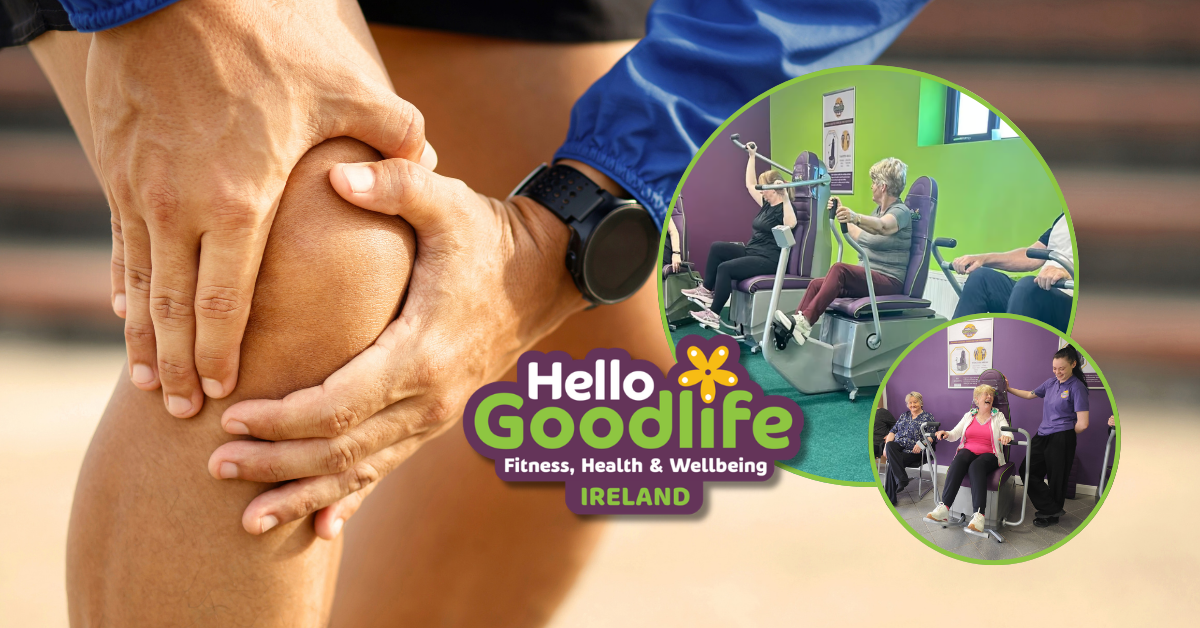
At the heart of Hello GoodLife Hub is Innerva power-assisted exercise circuit. Unlike conventional resistance equipment, the machines meet you where you’re at and will compensate for what you’re missing so you can get going and start to begin your fitness journey today! There are no traditional weight stacks to overcome, while the seated and recumbent design reduces stress on the body and severe impact on the joints.
The speed and programmes can be adjusted allowing people with different levels of strength and mobility to participate because the machine adapt to each person individually. A full circuit provides a high benefits, full-body workout in under 40 minutes and a complete global range of motion.
For everybody who has previously felt that exercise simply was not for them, that can completely change their relationship with movement.
What users are telling us
The figures from Innerva’s end-user impact research are particularly encouraging because they look beyond traditional ideas of fitness and examine the areas that matter enormously to people in everyday life.
The research found that 94% of users reported improvements in aerobic fitness, 93% in flexibility, 87% in strength and 80% in balance. Perhaps just as importantly, 96.5% reported a positive impact on their mental health.
Those findings matter because living well is about much more than a number on a weighing scales. Being able to move more freely, feel stronger getting out of a chair, have greater confidence walking, maintain balance or simply feel capable of doing more for yourself can have a profound effect on quality of life.
This is particularly relevant in Ireland today. The Healthy Ireland Survey 2025 found that 39% of people have a medically diagnosed long-term health condition, while 36% report a long-lasting condition, difficulty or disability. Almost one quarter of the population report being limited in their everyday activities as a result. Arthritis alone affects 7% of the population surveyed.
These are not small groups at the margins of our population. They are a substantial part of our communities, and our approach to physical activity needs to reflect that reality.
Breaking the pain and inactivity cycle
We need to move away from thinking that exercise only counts when it is strenuous or competitive. For many people, particularly those experiencing chronic pain or reduced mobility, success can begin with something much simpler: being able to move comfortably and confidently again.
That is why the Hello GoodLife model specifically aims to provide accessible exercise for people living with chronic conditions or mobility challenges, alongside preventative healthcare and rehabilitative support. The objective is to help people regain strength and confidence, improve mobility and support their independence through consistent physical activity.
It is also why the social side of Hello GoodLife is so important to me. Pain can be isolating. When somebody gradually stops going for walks, attending activities or meeting friends because they are worried about how their body will cope, their world can become smaller.
A Hello GoodLife Hub is deliberately designed to be somewhere people want to visit. Exercise is part of it, but so are the conversations, friendships, cups of tea and sense of belonging that develop around it. Our aim is to make looking after your health something enjoyable and sustainable rather than another medical appointment or obligation.
We need more ways for people to begin
Pain Awareness Month should encourage all of us to think differently about the people living with pain around us. It should also encourage us to consider what practical supports we can put in place to help people continue participating in their communities.
Ireland cannot simply tell people that physical activity is important without also making appropriate forms of physical activity accessible to them. If somebody feels unable to use a traditional gym, is recovering from illness or injury, has restricted mobility or has spent years believing exercise is no longer possible for them, we need to provide another starting point.
At Hello GoodLife Ireland, that is what we are trying to build: welcoming spaces where age, fitness level, mobility or confidence do not determine whether somebody belongs.
Pain may change how somebody moves, but it should not automatically mean giving up on movement altogether. Sometimes people simply need a different way to begin.
If you want to begin again get yourself into the nearest Hello GoodLife Hub!
No responses yet