When we talk about health, we often focus on the physical — strength, mobility, balance, heart health. But for many people, particularly as they get older, one of the biggest threats to wellbeing isn’t physical at all. It’s loneliness.
Across Ireland, social isolation is quietly affecting people in towns, villages and rural communities. Retirement, bereavement, reduced mobility or long-term illness can all shrink social circles. Over time, days become quieter, routines disappear and confidence fades. The knock-on effects on mental and physical health are well documented — yet rarely addressed in a practical, everyday way.
That’s where Hello GoodLife is different.
Designed for connection, not just exercise
From the outset, Hello GoodLife was never intended to be “just another gym”. The hubs are deliberately designed as welcoming social spaces, where movement and connection go hand in hand.
At the heart of each hub is a structured, low-impact power-assisted exercise circuit that adapts to the individual. Each machine meets the person where they are physically, adjusting to their current ability and allowing them to begin their fitness journey at a level that feels comfortable and achievable. There is no pressure to keep up, no expectation to perform — just movement that works with the body, not against it.
As people move through the circuit at their own pace, the body naturally releases dopamine and serotonin — the “feel-good” chemicals that lift mood, reduce stress and make exercise something to enjoy rather than endure. Over time, that positive association builds. Exercise becomes something people look forward to, and the Hello GoodLife Hub becomes a place they genuinely love returning to.
Power-assisted exercise, personalised to your starting point — your pace, your progress.
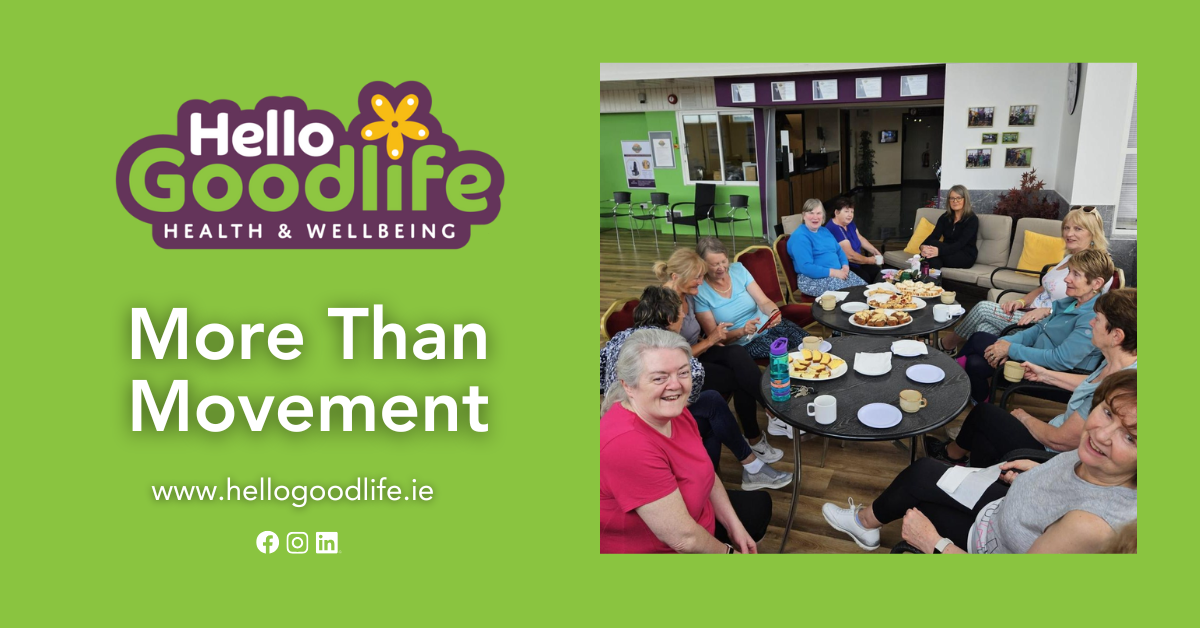
Equally important is what happens around the circuit. Comfortable seating, a relaxed atmosphere and a simple tea-and-coffee setup encourage people to stay, chat and get to know one another. There’s no rushing in and out, no feeling of being out of place. For many members, the social side becomes just as important as the physical benefits.
A reason to get out, a place to belong
One of the most powerful things Hello GoodLife provides is routine with purpose. Having a set time to attend, familiar faces to meet and a supportive environment to return to each week gives people a reason to leave the house — something that can’t be underestimated.
These regular, low-pressure interactions help rebuild confidence, especially for those who may have withdrawn socially over time. Conversations happen naturally. Friendships form organically. Support networks grow without being forced.
Members often describe their session as “exercise that feels like meeting friends for a cuppa” — and that’s exactly the point.
Social wellbeing is health care
Research consistently shows that social connection plays a vital role in mental and emotional wellbeing. Feeling part of a community can reduce stress, improve mood and even support better physical health outcomes.
Hello GoodLife integrates this understanding into its model, recognising that keeping people connected is a form of preventative health care. By combining accessible, personalised movement with meaningful social interaction, the hubs help address two challenges at once — physical inactivity and social isolation.
This is particularly important in rural and smaller communities, where services can be limited and opportunities to connect may be fewer.
Community-led, people-centred
Every Hello GoodLife hub reflects the community it serves. Local leadership, familiar faces and a shared sense of ownership create an environment where people feel comfortable and valued. It’s not about targets or trends — it’s about people supporting people.
In a world that often feels increasingly disconnected, Hello GoodLife offers something refreshingly simple: a place where everyone is welcome, movement is manageable and no one has to feel alone.
Because staying well isn’t just about keeping active — it’s about staying connected.


No responses yet